How it works
How the machine works.
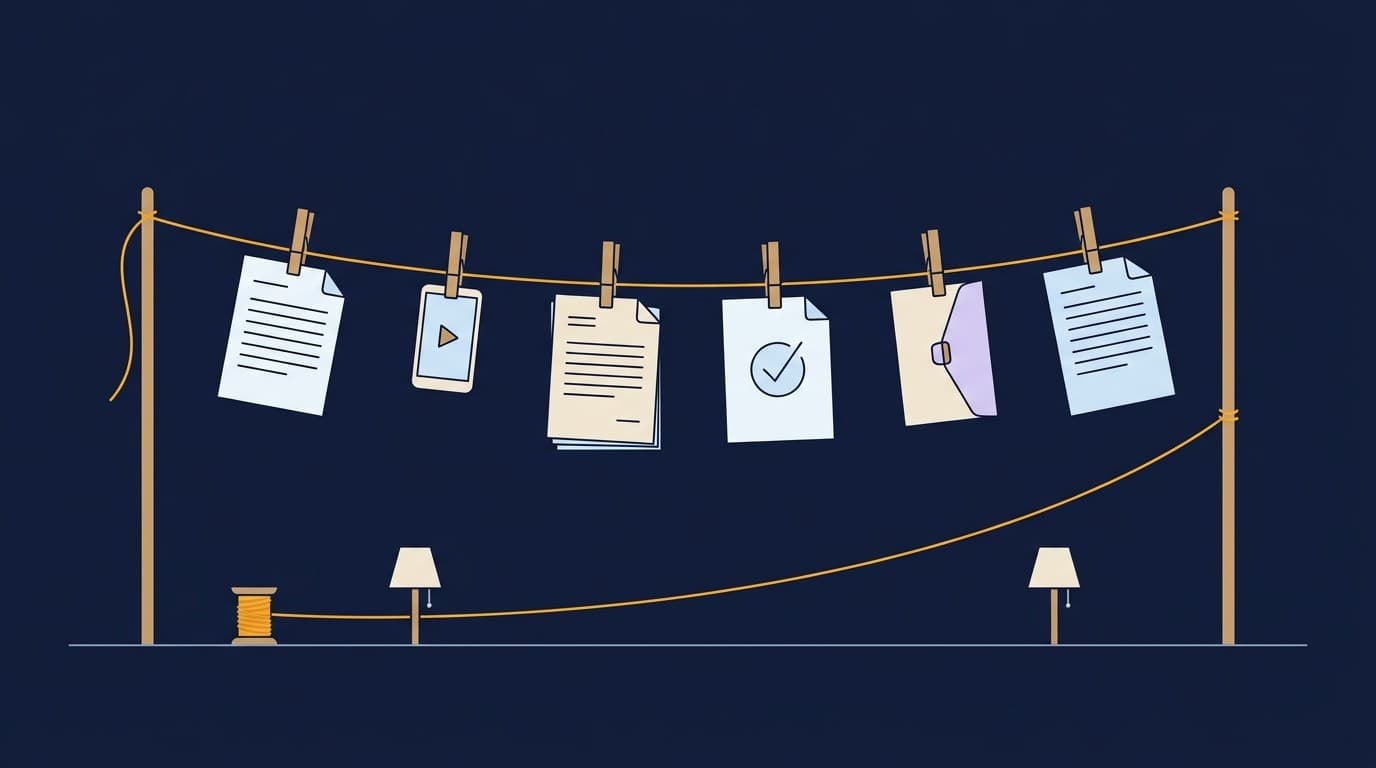
Your expertise goes in at one end. Six stations later the market has met it, answered it, and taught the next piece. Every service period, in this order.
The system, station by station
Your expertise goes in. A visible authority system comes out.
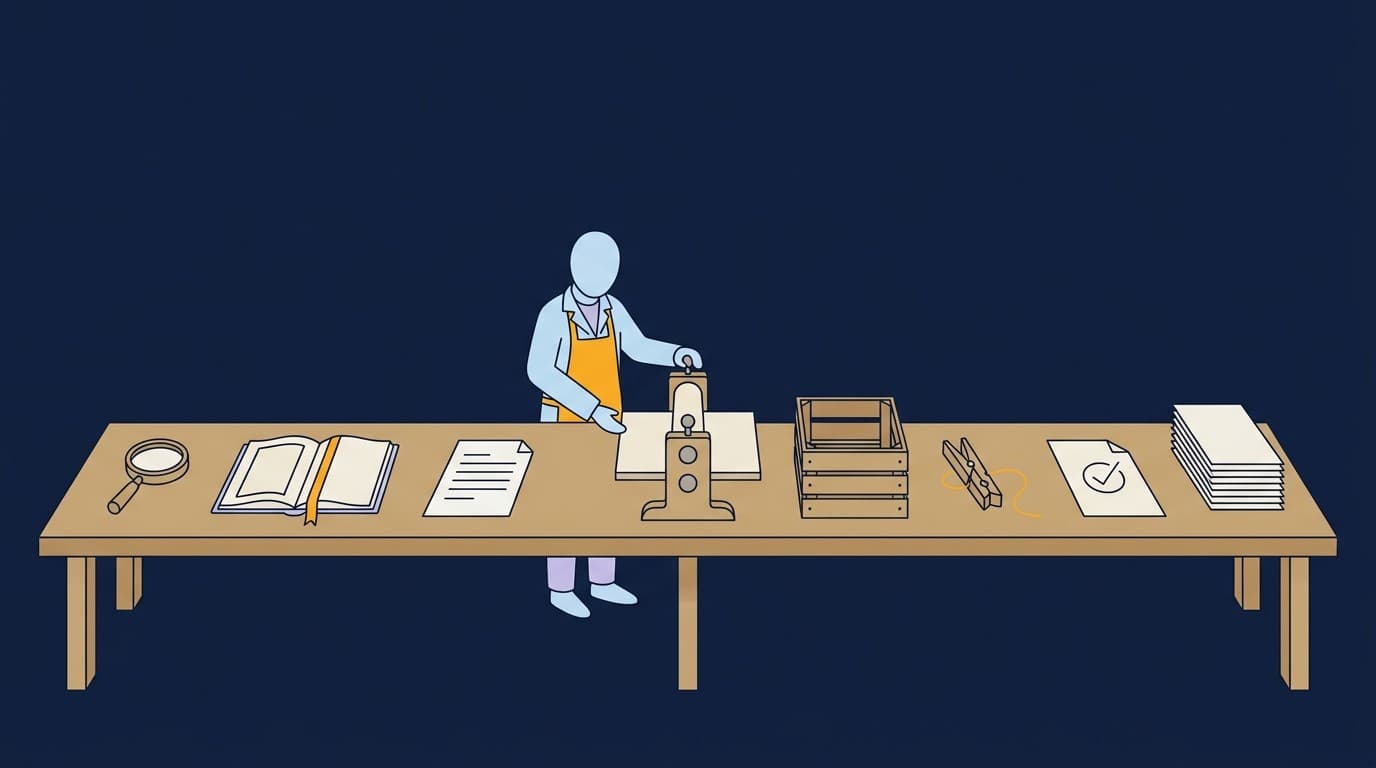
One root idea travels six stations. Each has one job and one person deciding. Nothing goes out unread, and nothing that comes back is wasted.

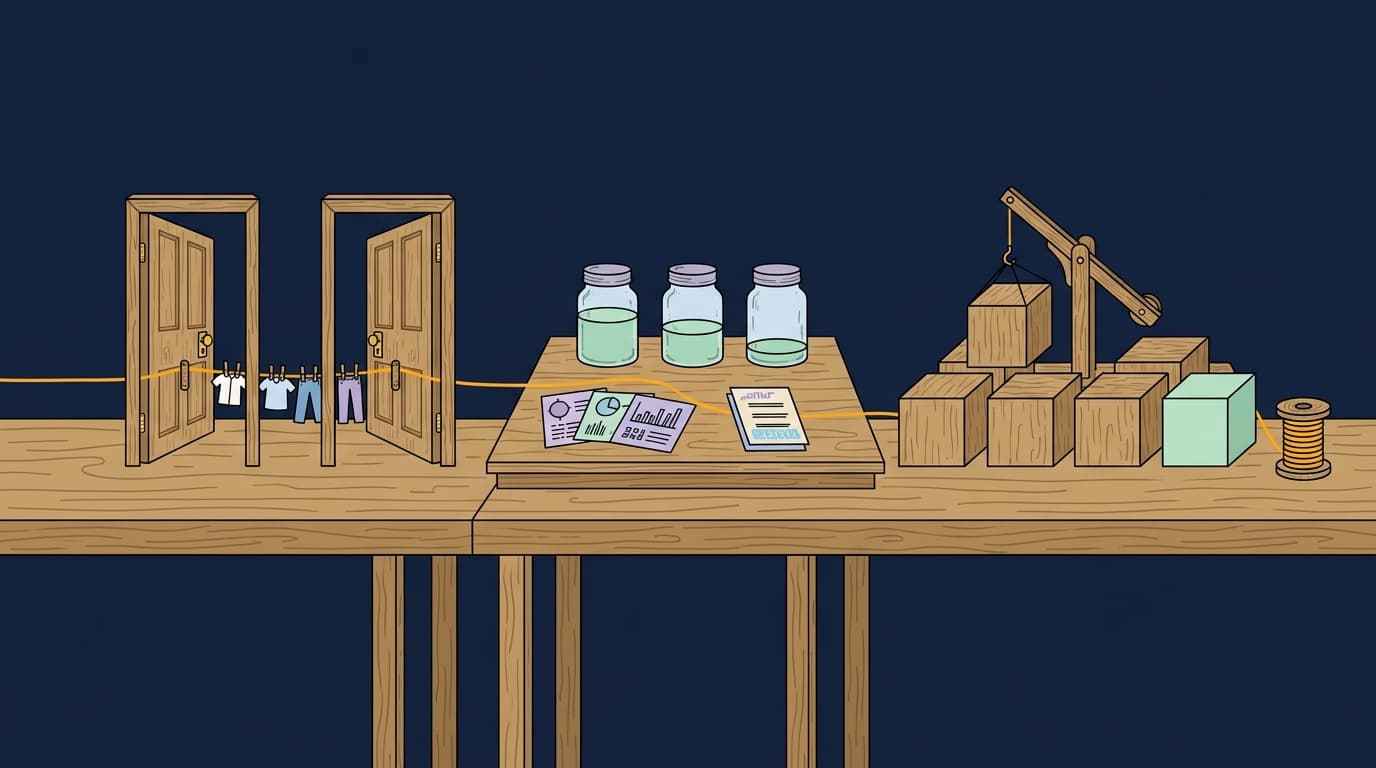
- 01 of 06ListenLoose fragments, sorted.
What your buyers are asking, objecting to and searching for, in their words.
- 02 of 06Decide the ideaOne spool, wound tight.
The fragments become one argument worth testing. One root idea at a time.
- 03 of 06Make itThe same idea, cut three ways.
The idea becomes the formats it deserves, written, spoken or shown, in your voice, checked and approved.
- 04 of 06Put it in the roomDispatched to two rooms.
Published where your buyer actually is, with a link we can measure.
- 05 of 06Read what came backSignals, labelled.
Visits, replies, requests, named enquiries: recorded with how sure we can be.
- 06 of 06Change one thingThe same spool, one part new.
Expected is read against actual. The weak part is named, replaced, and the same idea is sent again.
Who does what
What happens at each stage, and who does it.
Seven stages every service period. You are needed at three of them, briefly. Everything else belongs to Threadline.
- Stage 01You · Input
Raw expertise
You bring what only you have: what you know, what you have seen, what you would argue. It arrives as conversation, not as homework.
- Stage 02Threadline
Market intelligence
The Scanner reads what your market says, its questions, objections and language, from your own records, from public sources and from what you paste in. Every source is kept with its provenance. Login-walled platforms are refused by name, never scraped in the dark.
- Stage 03Threadline
Content decisions
Signals become theses; theses become ideas; ideas become scripts in your voice. Every factual claim is checked before it can be recorded. A person approves each step: the machine proposes, it does not decide.
- Stage 04You · Record
Production
You record against a teleprompter. The Builder cuts and packages. One source piece becomes the formats that fit it, each with its own title, thumbnail and caption, all sharing one lineage.
- Stage 05Threadline
Distribution
Published where the buyer is, with a tracked link so that a click, a form and a booked call can be joined up later. Paid amplification is recorded separately from organic reach so the two are never confused.
- Stage 06You · Sell
Commercial response
Enquiries, booked calls and named mentions are recorded with their evidence class. A buyer saying 'I saw the post' is stronger evidence than a like, and the system never upgrades weak evidence into strong.
- Stage 07Threadline
Learning
Expected vs actual. Diagnosis. One correction. Retest. Verdict. The trajectory is shown as it happened, improving, flat or declining, and a bad period reads as a bad period.
What we refuse to do
Four things the machine refuses to do.
Each gate is a rule in the software, not a policy in a document. They exist so that a fast operation cannot become a careless one.
- Gate 01Fact-check gate
A script with an unverified factual claim cannot be marked ready to record.
- Gate 02Approval gate
Nothing is scheduled that you have not approved.
- Gate 03Publish gate
A record cannot be marked published without the live URL.
- Gate 04Reading gate
A piece younger than 14 days is 'too early to read', not diagnosed.
One idea, start to finish
How one idea moves through a service period.
Ten steps, in the order they happen. The idea, the rooms, the numbers and the decision are invented to show the shape of the work.
IllustrativeSynthetic demonstration: illustrative, not a client result
- 01 · Evidence
'The forecast is a feeling': said by three founders on discovery calls.
- 02 · Idea
Why your forecast is a feeling, not a number.
- 03 · Expectation
Typical reach for the format; strongest dimension: relevance.
- 04 · Published
LinkedIn, Tuesday, with a tracked link.
- 05 · Performance
Reach a fifth of usual; retention high among those who watched.
- 06 · Commercial signal
One booked call. Buyer named the post.
- 07 · Diagnosis
Hook and packaging. Thesis preserved.
- 08 · Correction
Rewrite the opening around the board meeting where the number was wrong.
- 09 · Retest
Same thesis, new opening. Read at 14 days.
- 10 · Trajectory
Period 1: 1 diagnosed, 1 corrected, 1 verdict.
See it run on your business.
Apply for a diagnosis. We read every application and reply either way, including when the answer is that we are not the right fit.